

I was fidgeting with a napkin today.
Not trying to make anything.
Not trying to find a metaphor.
Just holding it. Folding it. Tearing little pieces from it while my mind was somewhere else.
And then I looked down and noticed something I couldn’t ignore.
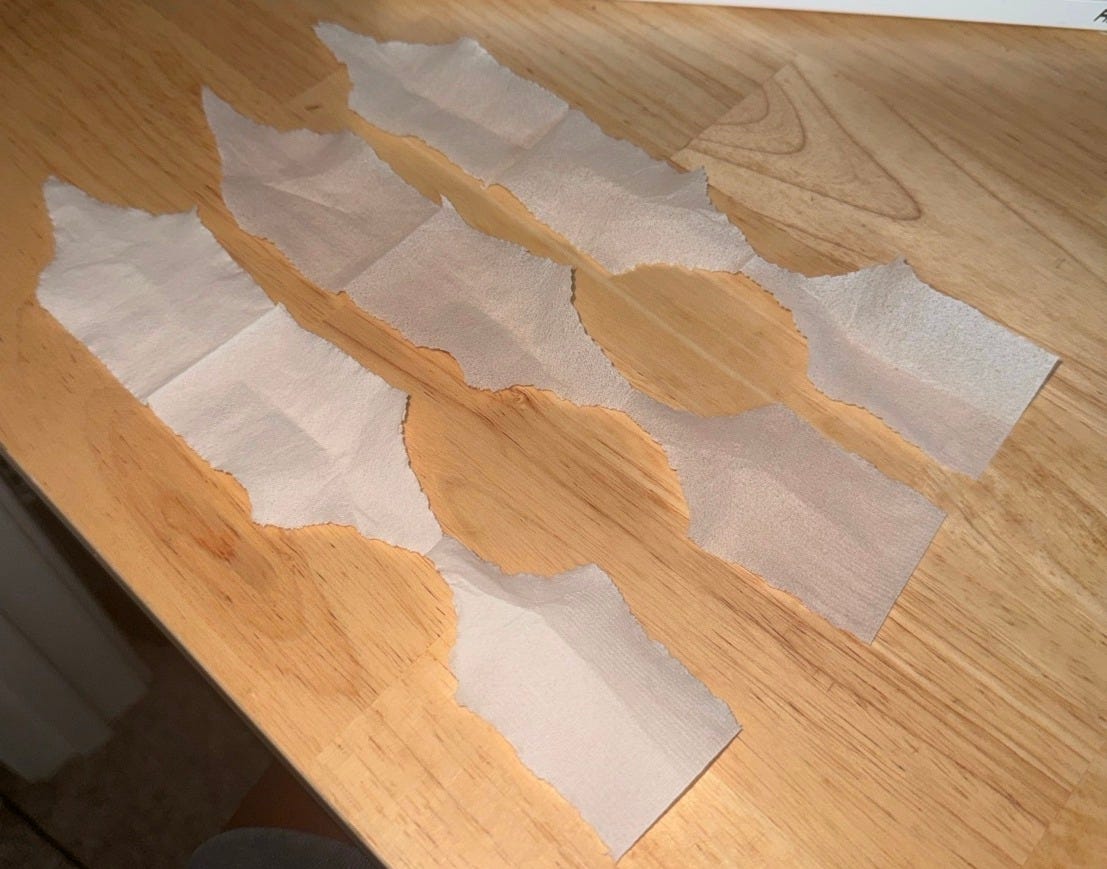
This napkin began as one intact structure.
One material.
One body.
Folded for strength.
Layered with hidden architecture.
Then I added more folds.
More pressure.
More variation.
The napkin was still the napkin.
But it was no longer simple.
It had been shaped by contact. Marked by pressure. Given memory through the fold.
The Tear
When I began to tear it, the original form broke apart.
But what emerged from it was not random.
Because of the folded nature of the source, the fragments carried repetition. They became similar, but not identical. Independent, but still connected.
Different in form.
Made of the same material.
That thought stayed with me.
The material was the same, but the form was different.
The Human Pattern
Maybe this is part of what it means to be human.
We are not the same shape.
We do not carry the same contours.
We do not unfold the same way.
But we are all made of the same source.
And now every life becomes a different expression of that original design.
Different gifts.
Different assignments.
Different wounds.
Different edges.
Different ways of carrying light.
Sameness was never the goal. Alignment was.
The Fragment Is Not Meaningless
That is what I saw in the fragments.
Not destruction.
Recomposition.
The original form did not stay intact.
But the pieces were not meaningless.
They were carrying origin.
They were carrying memory.
They were carrying the hidden architecture of the fold.
Recomposition
Maybe wholeness is not returning to the original shape.
Maybe wholeness is learning how every fragment still belongs to the larger body.
Not as it was.
Not as we imagined it.
Not as the original structure first appeared.
But as something newly arranged.
Something honest.
Something formed.
Something still carrying the source.
Recomposition is not the denial of rupture. It is the sacred arrangement of what remains.